
What your pet's astrology chart reveals about their behavior (and how to listen)
July 26, 2026
Your cat tears through the house at 2am and then crashes for twelve hours. Your dog needs to greet every stranger with absolute sincerity and falls apart when plans change. Your rabbit has strong opinions about which corner of the hutch is acceptable and which is not.
You've probably explained this behavior as personality: "he's just anxious" or "she's always been like this." What if the chart knows something you don't?
Pet astrology isn't a fringe idea. People have been reading animal charts since at least the 17th century, using birth time and location the same way they'd cast a human chart. The planets don't care what species the soul arrived in. And if you've ever watched your Leo cat perform for a room of strangers while your Virgo dog quietly catalogues every guest's shoes, you know there's something to it.
What goes into a pet's birth chart
A pet's chart needs a birth date, a birth location, and ideally a birth time. If you got your pet from a breeder, you may have all three. If you adopted, you might have an approximate date and a shelter city. That's enough to work with. An estimated birth time can be rectified later using behavioral cues, the same way human astrologers do it.
Sun sign tells you the core energy. A Gemini dog needs more variety and mental stimulation than the average retriever. A Scorpio cat will develop intense loyalties and exactly one person they fully trust.
Moon sign is often more visible in animals than in humans, because animals don't mask their emotional needs. A Pisces moon dog picks up on household tension before the argument even starts. A Capricorn moon cat is self-sufficient in a way that can read as cold until you understand that not needing constant reassurance is simply how they show they're comfortable.
Rising sign shapes how your pet meets the world: first impressions, social behavior, the way they walk into a room and decide who in it is safe.
You don't need to calculate this yourself. Free chart tools online will generate a full chart if you have the basics. Many pet owners are surprised at how immediately recognizable the result is.
Saturn vs. Venus energy: the two signatures worth knowing first
Once you have the chart, two placements tell you the most about day-to-day behavior.
Venus shows what your pet loves and what helps them feel safe. A Venus-in-Taurus cat wants routine, slow mornings, and the same spots in the same order. A Venus-in-Sagittarius dog wants to go somewhere new at least twice a week. Venus placements make sense of the things your pet is particular about: why this toy and not that one, why this person gets the full greeting and that person gets a suspicious sniff.
Saturn shows where your pet is working through hard lessons. It's the planet of structure and limitation. In a difficult house, it can show chronic anxiety or a nervous system that doesn't easily settle. In a supportive house, it shows genuine resilience, the kind that surprises you. A pet with Saturn in the fourth house often had a disrupted early home. Understanding that doesn't fix anything, but it shifts how you interpret the behavior. You stop seeing stubbornness and start seeing a nervous system doing its best with what it learned.
When you can hold both placements together, something useful comes into focus: what your pet needs to feel good (Venus) and where they're likely to struggle even in a good environment (Saturn). The two together give you a map.
A 3-card spread for your pet's current mood
Astrology tells you the baseline. Tarot reads what's happening right now.
This spread works best when you've noticed your pet is off. Something's different, and you can't pin it down. Pull three cards.
Card 1: What they're carrying. This is the current emotional weight. It might be a recent change, a body discomfort they can't tell you about, or something picked up from your own stress. The card doesn't diagnose, but it points a direction.
Card 2: What they're asking for. This card often surprises people. A Three of Cups might mean your dog actually needs a playdate, not a walk. The Empress might mean your cat needs warmth and physical contact more than play. The Star almost always means more rest, and usually means you need it too. Take this card literally when you can: what does the image show, and does any version of that fit your pet's day?
Card 3: One thing you can do today. A small, practical response. This card is meant to move you. If you get the Page of Pentacles, try a new activity. The Four of Swords: quiet the house. The Ace of Wands: add something that gives your pet a job to do, even a small one.
You don't need to be a skilled reader. The cards prompt noticing. The noticing is the work.
Listening is a practice
Most of us grew up thinking animals were simpler than we are. Not more different, just simpler. The more time you spend with a pet's chart and a deck of cards, the harder that assumption becomes to hold.
Your pet has a rich inner life they communicate through body language, through routine, through what they reach for and what they avoid. Astrology and tarot don't give you a magic decoder. They give you frameworks for paying closer attention. And closer attention, over time, is where real animal communication happens.
If you want a more structured way into that conversation, Pack Psychic is building exactly that. The app connects pet owners with readers who specialize in animal communication, helping you understand what your pet is working through and what they need from you.
Join the waitlist at Pack Psychic. It's free to join, and early members get priority access when the app opens.
Keep reading
Standard divination advice assumes energy you don't have. This is for the days when the deck is across the room and even picking it up feels like too much.
July 27, 2026
Read more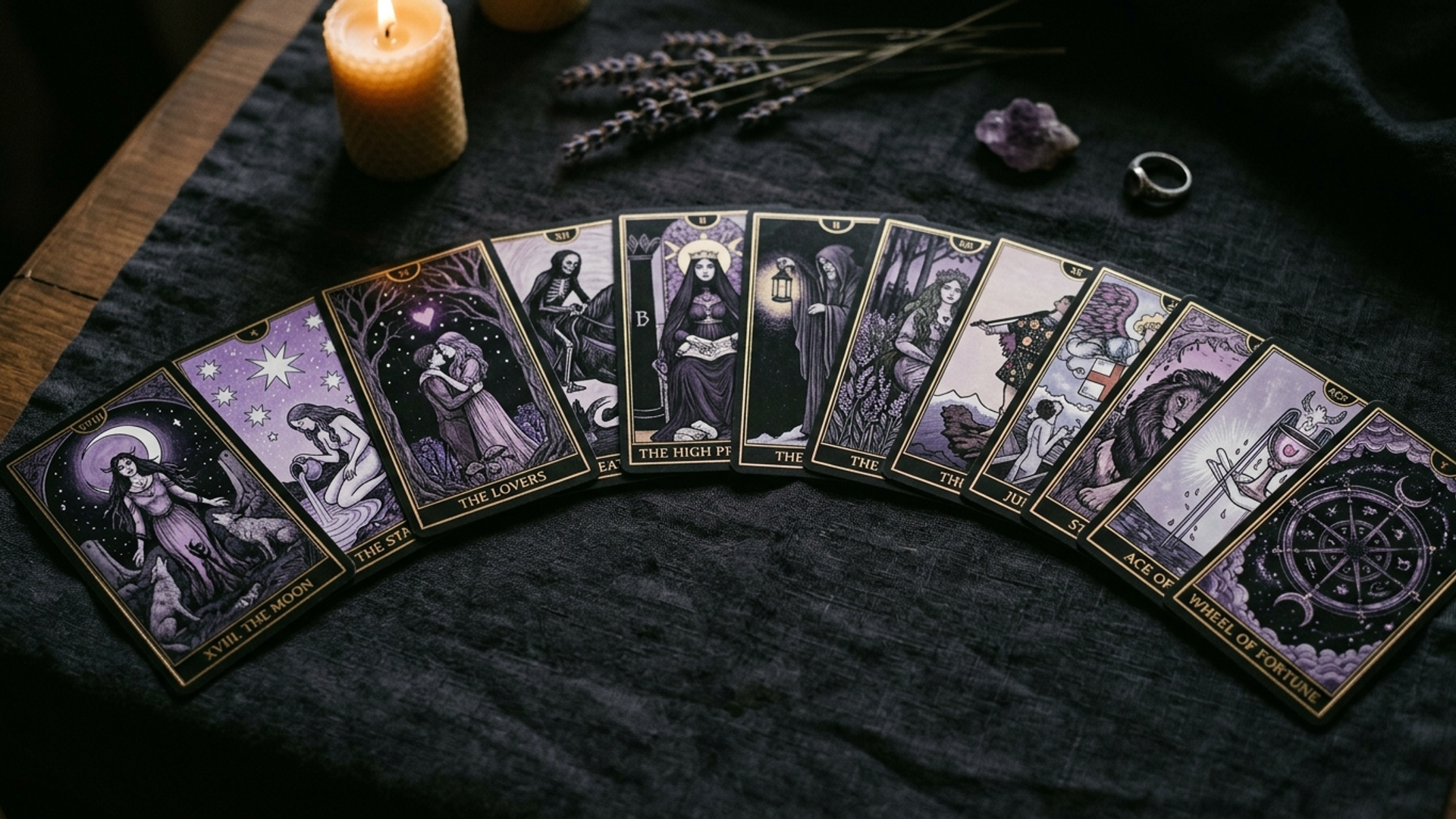
Journaling-based shadow work can trigger dissociation in trauma survivors before anything useful happens. Oracle cards externalize the reflection, giving you something to look at rather than demanding you generate hard material from inside yourself. Three trauma-informed spreads for shadow exploration.
July 26, 2026

Standard tarot spreads assume sustained attention, abstract thinking on demand, and a calm nervous system. Here are four spreads built around how ADHD and autistic minds actually work: hyperfocus states, time blindness, rejection sensitivity, and sensory overwhelm.
July 26, 2026