
Shadow work with oracle cards: a trauma survivor's guide
July 26, 2026
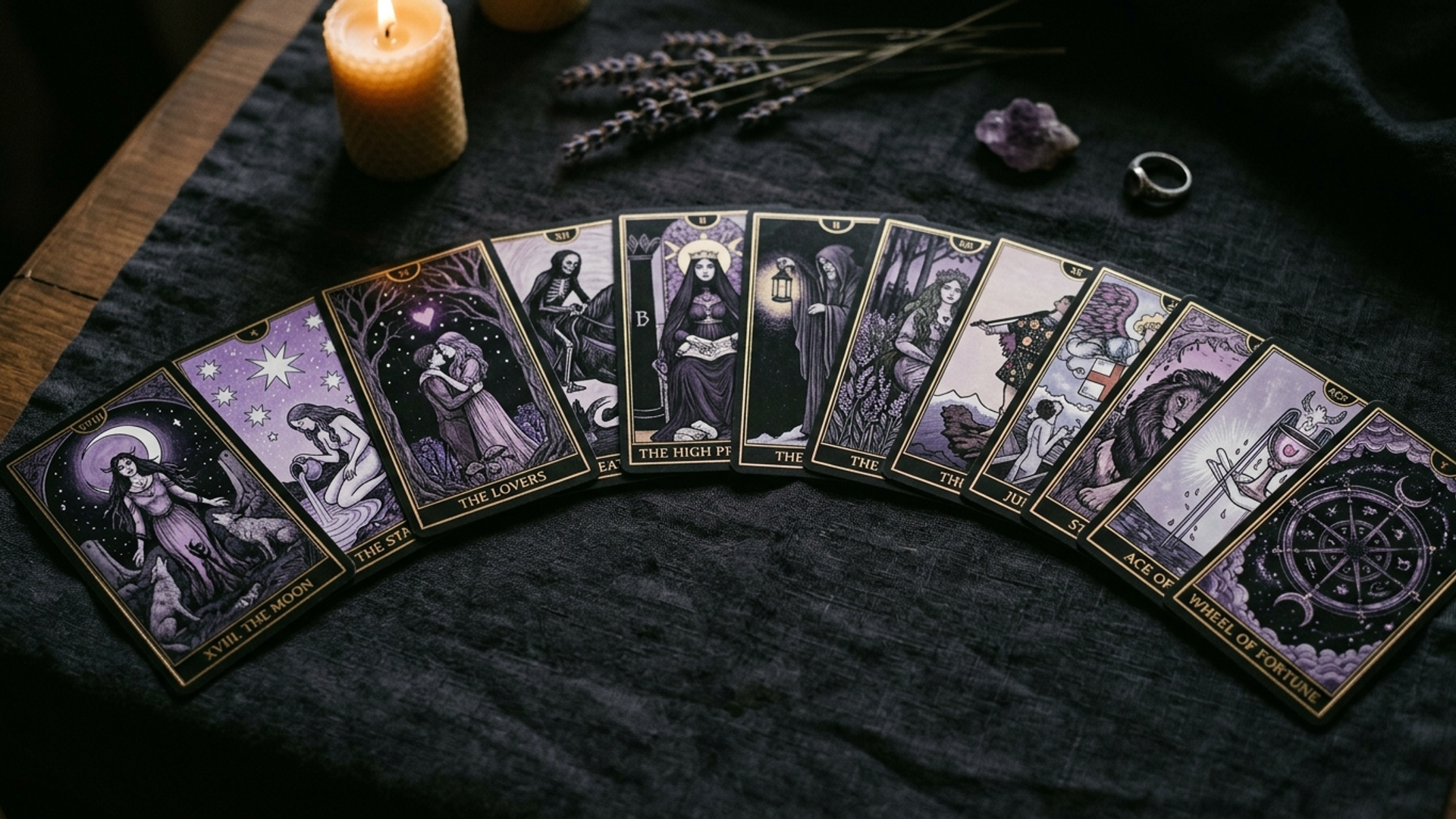
Shadow work and oracle cards for trauma survivors: a gentler door in
Journaling is the most common entry point into shadow work. You sit with a prompt. You write. You follow the thread wherever it leads.
For trauma survivors, that process can collapse before it starts.
The prompt lands. The writing feels urgent and important. Then the pen goes still. You're not stuck on what to say. You're not in the room anymore.
Dissociation doesn't feel dramatic. It feels like distance. The page goes flat. The question that mattered a moment ago seems abstract and far away. This is your nervous system doing what it was built to do: creating space between you and the hard thing.
Journaling as shadow work asks you to close that distance immediately and on purpose. For some trauma survivors, that's not a starting point. It's a wall.
Oracle cards offer a different approach.
Why oracle cards work differently for trauma survivors doing shadow work
The key difference isn't the cards themselves. It's externalization.
When you journal, you're generating the content. The shadow material comes from inside you and has to move through you before it lands on the page. For a nervous system that's learned to shut down certain content before it reaches consciousness, this is exactly the kind of demand that triggers protective numbness.
Oracle cards place an image or symbol between you and the reflection. The shadow is out there, not in here. You're looking at something that might be relevant, considering whether it fits, deciding how close to get. You're in control of the approach.
This is titration. Shadow work for trauma survivors isn't about maximal contact with difficult material. It's about choosing how close to go and having the option to step back.
Oracle cards give you that option in a way that blank-page work doesn't.
The other advantage: oracle cards don't require sustained abstract thought. Dissociation often surfaces as cognitive fog, the inability to hold complex ideas together or generate reflection on demand. An image on a card bypasses that. You're responding to something concrete and external. The card shows you a figure, a symbol, a scene. Your nervous system can respond to an image even when it can't respond to a question.
If you're new to using cards in trauma recovery, a trauma-informed approach to tarot covers the foundational principles: short spreads, concrete position names, grounding before you start, and clear closing rituals. Those principles apply here too.
Three oracle spreads for shadow exploration
These spreads are built for oracle cards for healing trauma. They're short, with specific position names and defined stopping points.
The doorway spread: beginning shadow work
Use this when shadow work feels inaccessible or overwhelming. The goal isn't insight. It's contact. You're standing at the edge and looking in.
Ground yourself before pulling. Name the room you're in. Feel your feet on the floor. Take three slow breaths.
Card 1: What's at the threshold. The quality or emotion that keeps appearing at the edge of your awareness. Not the wound itself. The signal.
Card 2: What your shadow is protecting. Not a threat. Something tender that needed guarding. Let the card offer it without you having to name it first.
Card 3: One word of permission. What would make it feel safe to look a little closer? Not a path forward. Just a word.
After pulling: sit with the three cards for two minutes. Don't analyze. Just notice. Then close the deck. Say aloud: "This is enough for today."
The mirror spread: working with a recurring pattern
Use this when you've noticed a pattern you want to understand: a reaction that keeps happening, a feeling that surfaces without an obvious cause.
Card 1: The surface. How this pattern shows up. What others see. What you notice yourself doing.
Card 2: What's underneath. The emotion or belief beneath the behavior. Let the card speak to what you don't say out loud.
Card 3: Where it began. Not a precise memory. A felt sense of origin. The card points toward beginnings, it doesn't define them.
Card 4: What it needs. Not what you need to do about the pattern. What the part of you that carries it needs right now.
Leave space between cards. You're not solving anything. You're looking.
The integration spread: after a hard inner experience
Use this after therapy, a difficult conversation, an emotional flashback, or any experience that left something unresolved. Not to process in the moment. To settle.
Card 1: What is still active. What's still moving in you. Not what you think it means. What it feels like.
Card 2: What was touched. The part of you that was reached. The old wound that got brushed.
Card 3: What protection came up. How you've sealed it since. What armor arrived.
Card 4: The one thing that needs tending. Not a solution. A small act of care. What would feel like being kind to yourself today?
After pulling: write one sentence for each card. Then close the deck and drink something warm. The reading is complete.
Shadow work at your own pace
Shadow work for trauma survivors isn't an immersion experience. It's better understood as slow archaeology: you brush away a little at a time, you look at what you find, you cover it back up if you need to.
Oracle cards hold the structure for that kind of careful work. They give you something to look at rather than demanding that you generate the hard thing from inside yourself. The shadow has somewhere to land that isn't the center of your chest.
If you want to go deeper into this kind of practice, Familiar Feral's Founding Reader pre-order includes Trauma Tarot, a deck and journal system built specifically for this work. The spreads there go further. But the principles above are a starting point that belongs to you, with or without the deck.
The door doesn't have to open all at once.
Keep reading
Standard divination advice assumes energy you don't have. This is for the days when the deck is across the room and even picking it up feels like too much.
July 27, 2026
Read more
Standard tarot spreads assume sustained attention, abstract thinking on demand, and a calm nervous system. Here are four spreads built around how ADHD and autistic minds actually work: hyperfocus states, time blindness, rejection sensitivity, and sensory overwhelm.
July 26, 2026
Standard tarot spreads assume presence, focus, and a calm nervous system. When you're in survival mode, none of that is guaranteed. Here's how trauma-informed divination works differently.
July 26, 2026