
Oracle cards for depression: how to use divination when you can't get out of bed
July 27, 2026
Some days, pulling a card feels impossible. The deck is across the room. The ritual setup is too much. The thought of sitting with your feelings for thirty minutes makes the depression heavier, not lighter.
This post is for those days.
Oracle cards and depression aren't a natural pair in most spiritual circles. Divination tends to get packaged with energy, momentum, forward movement. Pull a card to see what's coming. Set intentions. Trust the process.
When you're grieving or in a depressive episode, none of that language fits. You're not moving forward. You might not believe in process. The idea of trust can feel like an accusation.
So let's talk about a different use for oracle cards: presence. Not clarity. Not healing. Just a small point of contact between you and the moment you're in.
Why oracle cards can help when motivation is zero
Depression shrinks the world. The mental load of most spiritual practices, even ones you've done for years, becomes too heavy when you're in it.
Oracle cards have one structural advantage over most practices: they require almost nothing from you. You don't need to write. You don't need to speak. You don't need a question formed. You can pull one card, look at it, and put it back. That counts.
There's something else worth naming. Oracle cards return your own perception to you. When depression flattens everything into the same gray texture, a card can act as a small interruption. Not an answer. An object. A thing to look at that doesn't ask anything back.
That's not spiritual bypassing. It's not a cure. It's a tool that works at low capacity. For a lot of people with depression or grief, that's exactly what makes it reachable on the days when nothing else is.
A 2-card pull for dark days
This spread requires almost nothing. You don't need a journal. You don't need a candle or a ritual setup. You don't need to feel ready.
Find the deck. Shuffle it as much or as little as you want. Pull two cards.
Card 1: What's here right now.
Not what's wrong. Not what you should fix. What's here. Look at the card and let it name the texture of this moment. If nothing comes, that's fine. The card is just company.
Card 2: What's small and possible.
Not a solution. Not a step forward. One thing that is small and possible right now. It might be drinking water. It might be letting yourself stay where you are. The card isn't demanding action from you. It's offering a single, low-stakes option.
That's the whole reading.
If you have the energy to write one sentence about what you saw, do it. If you don't, close the deck. You still did something, and that matters.
Journaling with cards when words feel impossible
Depression and grief often make writing feel like lifting something heavy for no reason. If you're trying to journal your way through a reading and hitting a wall, the problem isn't you. The format is the wrong fit for where you are right now.
One alternative: describe the card physically. Not symbolically. What colors do you see? Is the image busy or calm? Does the figure look toward you or away? You're reporting, not analyzing. It's a much lower bar and it still creates a record of where you were.
Another option: copy the card's title onto a page and write one word next to it. Not a sentence. One word that lives near the title somewhere in your chest. "Heavy." "Familiar." "No." That's a journal entry. It counts.
If even that is too much, close the journal. The card still made contact. You still showed up. That's not nothing, even when it feels like nothing.
Grief and oracle cards: a few things worth knowing
Grief isn't the same as depression, even when they look similar from the inside. One thing that's particular to grief: you might pull a card and immediately think of the person you lost, or the version of yourself that's gone.
Let that happen. You don't need to redirect toward a lesson or the card's traditional meaning. If the Tower makes you think of the moment you got the call, that's the reading. Sit with that for as long as you need to.
Grief doesn't have to be translated into insight to count as spiritual work. The cards don't need to teach you something. They can just witness.
That's allowed. Some days, being witnessed is the whole point.
Depressed Divination: coming soon
We've been building something for exactly this: Depressed Divination, a deck and journal system designed for low-energy, high-honesty divination practice. It's built for the days when the standard deck feels like too much, when the spreads in most books assume more capacity than you have, when you need something that meets you where you actually are rather than where the instructions expect you to be.
It's not live yet. You can join the waitlist to hear when it launches.
The spiritual community doesn't talk enough about what divination looks like when you're not okay. That's what Depressed Divination is for.
One more thing
If you're in a depressive episode right now and you read this far, you showed up. You opened something. That's real, even if it doesn't feel real to you right now.
Oracle cards won't fix depression. Nothing in this post will fix depression. But a single card, pulled without expectation, can be a small act of self-contact on a day when you feel very far from yourself.
That's enough. It doesn't have to be more than that.
Keep reading
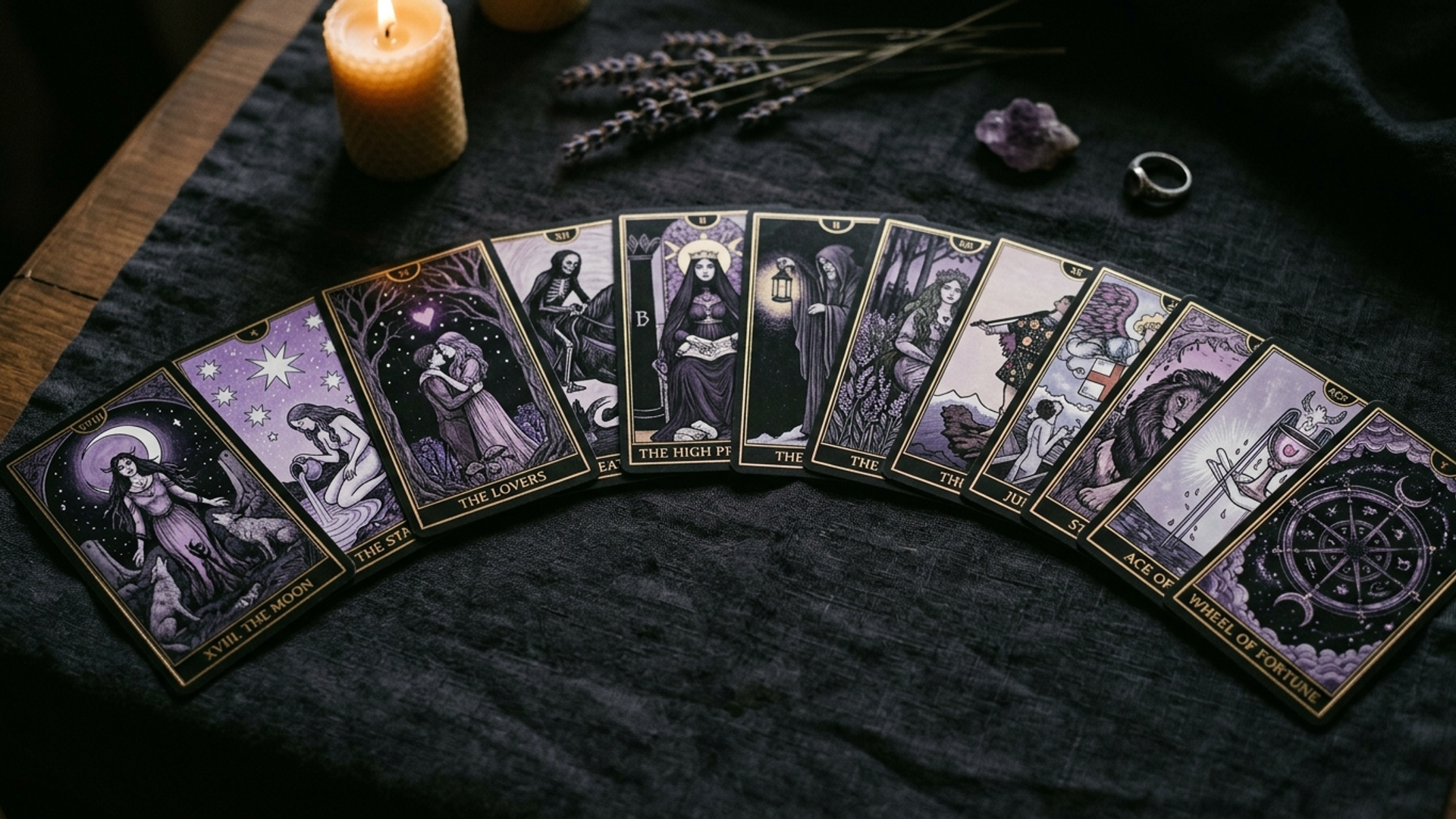
Journaling-based shadow work can trigger dissociation in trauma survivors before anything useful happens. Oracle cards externalize the reflection, giving you something to look at rather than demanding you generate hard material from inside yourself. Three trauma-informed spreads for shadow exploration.
July 26, 2026
Read more
Standard tarot spreads assume sustained attention, abstract thinking on demand, and a calm nervous system. Here are four spreads built around how ADHD and autistic minds actually work: hyperfocus states, time blindness, rejection sensitivity, and sensory overwhelm.
July 26, 2026
Standard tarot spreads assume presence, focus, and a calm nervous system. When you're in survival mode, none of that is guaranteed. Here's how trauma-informed divination works differently.
July 26, 2026