
Spiritual tools that work the way neurodivergent minds actually do
July 26, 2026
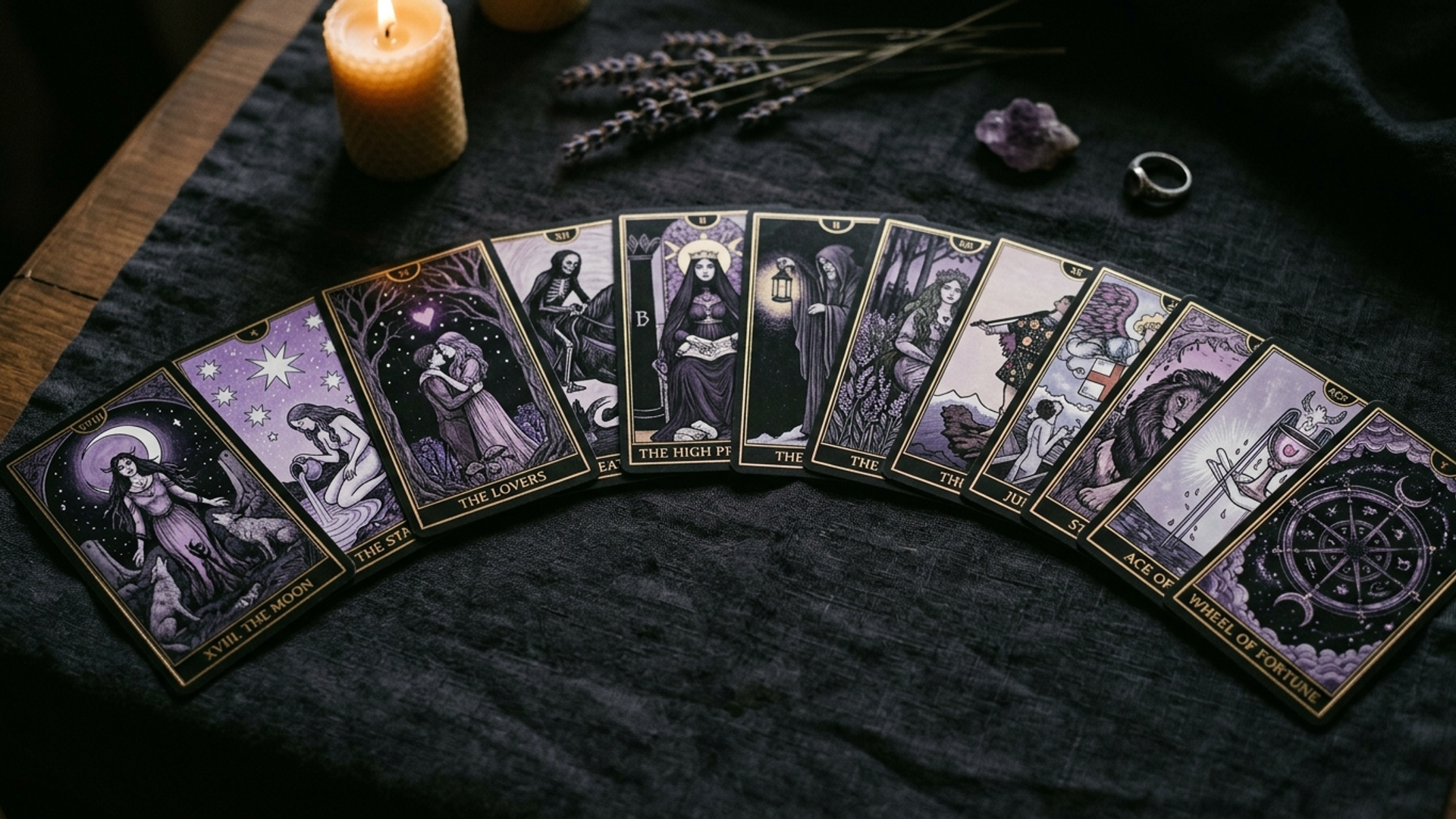
Most divination guides assume you can sit still for 45 minutes, journal three pages by hand, and remember what card position four meant by the time you flip position seven.
That's not how ADHD works. It's not how autistic processing works. And it's definitely not how a trauma-wired nervous system works.
So a lot of neurodivergent people do one of two things: they force themselves through practices designed for neurotypical minds and feel broken when they can't sustain them, or they give up entirely and decide they're not cut out for spiritual practice.
Neither of those is the truth. The tools are the wrong fit.
What neurodivergent spiritual practice actually needs
The honest version: we need tools that assume a wandering mind, a sensitive body, and a nonlinear way of knowing things.
That means shorter spreads. Concrete positions with concrete meanings. No "sit with this energy for a week." Rituals that work in five minutes or fifty, depending on what your brain has that day.
Tarot works for neurodivergent practitioners. But only when the practice is built around how we actually process, not how we're supposed to.
The attention problem
ADHD practitioners often pull a single card and immediately lose the thread of the question they asked. Autistic practitioners can hyperfocus on one card's symbolism so deeply the rest of the spread never happens. Trauma survivors sometimes freeze completely when a card surfaces something difficult.
These aren't failures of spiritual focus. They're a nervous system being a nervous system.
The fix isn't better discipline. It's structure that works with the brain you have.
Smaller spreads, clearer anchors
Standard Celtic Cross spreads have ten positions. Ten is a lot to track when your working memory is already taxed. Three positions is a complete reading. Five is plenty for most questions.
Written anchors matter. Before you pull, write down your question. One sentence. It sounds obvious until you realize how often you've pulled cards and then couldn't remember why.
Put the question on a sticky note. Read it again before each card. This is not a workaround. This is how neurodivergent practitioners get accurate readings.
The focus spread: a diagnostic pull for ADHD, autism, and trauma recovery
This spread works best when you need clarity and your brain is already full. It's not a general past-present-future. It's a quick nervous system check-in with a practical anchor.
Before you pull: Write one sentence. The actual thing on your mind, not a polished question. "I'm worried I messed up that conversation." "I don't know how to start this project." The realness of the sentence matters more than the phrasing.
Card 1: The signal
What does your nervous system already know? This is the card for the body's read on the situation, not the brain's analysis of it.
Card 2: The pattern
What are you doing on autopilot that isn't serving you right now? Look for behaviors, not causes. The card tells you the what.
Card 3: The small action
Not a solution. Not a life lesson. One concrete thing you can do before the end of today. If the card doesn't suggest anything actionable, put it face-down and pull a clarifier.
After you pull: Write two sentences. What you saw. What you'll do. That's the whole journal entry.
Two sentences keeps the reading finite. It gives ADHD brains a clear endpoint. It gives autistic practitioners a defined boundary to work within. It gives trauma survivors permission to stop when they get there.
Why daily card practices usually fail neurodivergent people
The standard advice: pull one card every morning, journal about it, build the habit over weeks.
The problem is that this requires perfect consistency, hand-written reflection, and rebuilding the routine every time you break the streak. The streak breaks. The shame follows. The practice dies.
What works better: pull when you need to, not on schedule. Keep the deck somewhere visible. Give yourself permission to read digitally if shuffling a physical deck is too much on a hard sensory day. The card doesn't know what time it is.
For autistic practitioners specifically, the pressure of daily variation can be exhausting. A new card every morning means a new symbolic vocabulary every morning. One approach that works well: stay with a single card for two or three days. Let the associations build. Move when you're ready.
Spiritual tools for trauma recovery: a few things that are different
Trauma and divination need their own conversation. Three things matter more here than anywhere else.
Ground first. If your nervous system is activated, the reading will reflect activation, not insight. Two minutes of orienting before you touch the deck changes what you access. Look around the room. Name five things you can see. Then pull.
Give yourself an exit before you start. Decide in advance that you can stop if you need to. Not because you're avoidant. Because a flooded nervous system can't take anything useful from a card.
And: the cards don't have to mean the hardest thing. Sometimes the High Priestess is about trusting yourself right now, not about your mother. You're allowed to take the gentler read. Depth doesn't require suffering.
When the practice fits, something shifts
When neurodivergent practitioners find tools built around how they actually process, the work stops feeling like something they're failing at.
The practice becomes theirs. Ritual stops being a performance. Shadow work stops requiring perfect conditions.
Your diagnosis doesn't disqualify you from a meaningful spiritual practice. It just means the practice needs to be built differently than the instructions say.
Start with three cards and two sentences. See what it opens.
Keep reading
Standard divination advice assumes energy you don't have. This is for the days when the deck is across the room and even picking it up feels like too much.
July 27, 2026
Read moreJournaling-based shadow work can trigger dissociation in trauma survivors before anything useful happens. Oracle cards externalize the reflection, giving you something to look at rather than demanding you generate hard material from inside yourself. Three trauma-informed spreads for shadow exploration.
July 26, 2026

Standard tarot spreads assume sustained attention, abstract thinking on demand, and a calm nervous system. Here are four spreads built around how ADHD and autistic minds actually work: hyperfocus states, time blindness, rejection sensitivity, and sensory overwhelm.
July 26, 2026